

Today, diabetes (high blood sugar) is one of the fastest-growing health problems in the world. The biggest challenge with diabetes is that once it develops, it is not easy to completely cure—but the good news is, it can be controlled.
Ayurveda clearly says, “Food itself is medicine.”
The right Ayurvedic diet not only helps balance blood sugar levels but also improves digestion, boosts energy, and strengthens immunity.
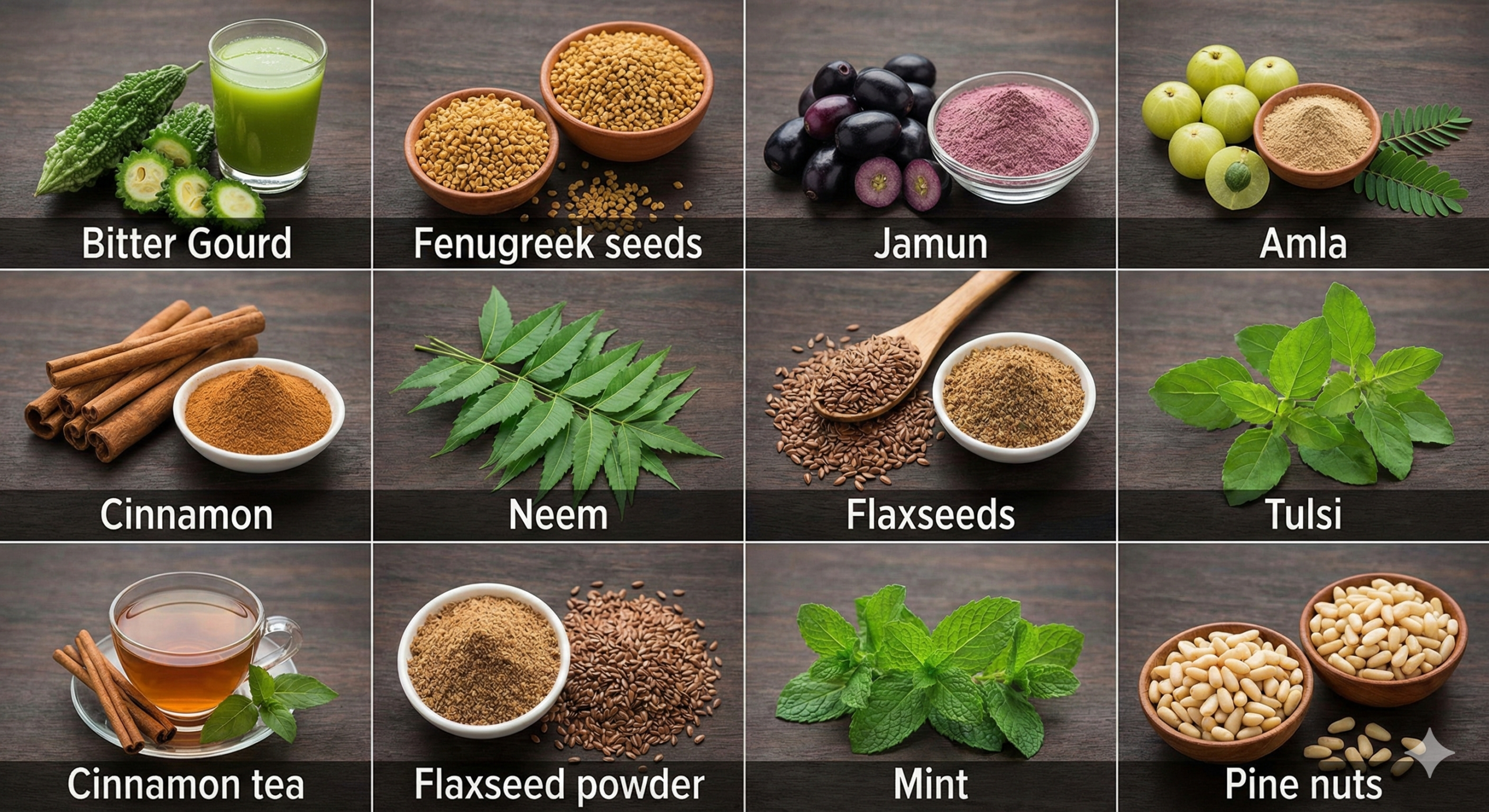
10 powerful Ayurvedic foods that can be a blessing for people with diabetes
1. Bitter Gourd (Karela) – Natural Insulin Booster
Bitter gourd is one of the best foods for diabetes. It contains a compound called charantin, which helps reduce blood sugar levels naturally. Drinking bitter gourd juice or eating it as a vegetable improves insulin activity and keeps sugar under control.
2. Fenugreek Seeds (Methi Dana) – Blood Sugar Controller
Fenugreek seeds are rich in soluble fiber and amino acids. They slow down sugar absorption in the blood. Soaking fenugreek seeds in water overnight and consuming them on an empty stomach in the morning is very beneficial.
3. Jamun (Indian Blackberry) – Natural Anti-Diabetic Fruit
Jamun fruit and its seeds are both very helpful for diabetes. Jamun seed powder helps control blood sugar and reduces problems like frequent urination and excessive thirst.
4. Amla (Indian Gooseberry) – Full of Antioxidants
Amla is rich in vitamin C and antioxidants. It helps revive pancreas cells and supports balanced insulin secretion. Daily intake of amla juice or powder is excellent for diabetic patients.
5. Gymnema (Gurmar Leaves) – “Sugar Destroyer”
In Ayurveda, gurmar is known as “Madhunashini,” meaning “destroyer of sugar.” These leaves help lower blood sugar levels and also reduce cravings for sweet foods.
6. Cinnamon (Dalchini) – Taste with Health
Cinnamon improves insulin sensitivity and helps lower blood sugar. Adding a small amount of cinnamon to warm water or herbal tea daily can help keep diabetes under control.
7. Neem Leaves – Bitter but Powerful
Neem leaves help purify the blood and control blood sugar levels. Neem also boosts immunity and protects diabetic patients from infections.
8. Flaxseeds (Alsi) – Rich in Omega-3
Flaxseeds contain omega-3 fatty acids and fiber. They prevent sudden sugar spikes and support heart health. Flaxseed powder mixed with water or milk is very helpful for diabetics.
9. Tulsi (Holy Basil) – A True Friend for Diabetics
Tulsi leaves improve insulin function and help reduce stress. The antioxidants in tulsi help control blood sugar and reduce fatigue.
10. Barley (Jau) – Best Grain for Diabetes
Barley is considered one of the best grains for diabetes in Ayurveda. Barley roti or porridge helps remove toxins from the body and keeps blood sugar levels stable.
Ayurvedic Diet Tips for Diabetic Patients
- Eat light, fresh, and easily digestible food
- Avoid oily, sugary, and junk foods
- Eat small meals at regular intervals
- Include yoga and pranayama in daily routine
- Get enough sleep and reduce stress
Conclusion
Diabetes is not an incurable disease, but a lifestyle-related condition. With the right food choices and daily discipline, it can be well managed. Ayurvedic foods like bitter gourd, fenugreek, jamun, amla, and gurmar not only control blood sugar but also keep the whole body healthy and energetic.
Frequently Asked Questions (FAQ) on Diabetes & Ayurvedic Diet
Q1. Can diabetes be cured completely with Ayurveda?
Diabetes cannot be fully cured, but Ayurveda helps control it naturally. With the right food, herbs, lifestyle, and daily routine, blood sugar levels can stay balanced for a long time.
Q2. Is bitter gourd really helpful for diabetes?
Yes. Bitter gourd (karela) helps lower blood sugar naturally. It works like natural insulin and improves the body’s ability to use sugar properly.
Q3. How should fenugreek seeds be taken for diabetes?
Soak 1 teaspoon of fenugreek seeds in water overnight. Drink the water and chew the seeds in the morning on an empty stomach for best results.
Q4. Are fruits safe for diabetic patients?
Yes, but only low-glycemic fruits like jamun, apple, guava, pear, and berries. Avoid overeating sweet fruits like mango, banana, and grapes.
Q5. Can Ayurvedic herbs replace diabetes medicines?
No. Never stop your prescribed medicines without consulting a doctor. Ayurvedic foods and herbs should be used as support, not as a replacement.
Q6. Is barley better than wheat for diabetes?
Yes. Barley (jau) is better because it releases sugar slowly into the blood. It helps prevent sudden sugar spikes and keeps energy steady.
Q7. Can stress increase blood sugar levels?
Absolutely. Stress increases hormones that raise blood sugar. Yoga, pranayama, meditation, and tulsi help reduce stress and control sugar levels.
Q8. How long does Ayurveda take to show results in diabetes?
Ayurveda works slowly but deeply. With regular use of the right food and lifestyle, improvement can be seen in a few weeks, but consistency is key.
Q9. Is fasting good for diabetic patients?
Long fasting is not recommended for diabetics. Instead, eat small, healthy meals at regular intervals to keep blood sugar stable.
Q10. What is the most important rule for diabetes control?
The golden rule is:
Right food + regular routine + stress control + medical guidance
Benefits of Orange : A Simple, Natural Gift for Body and Mind